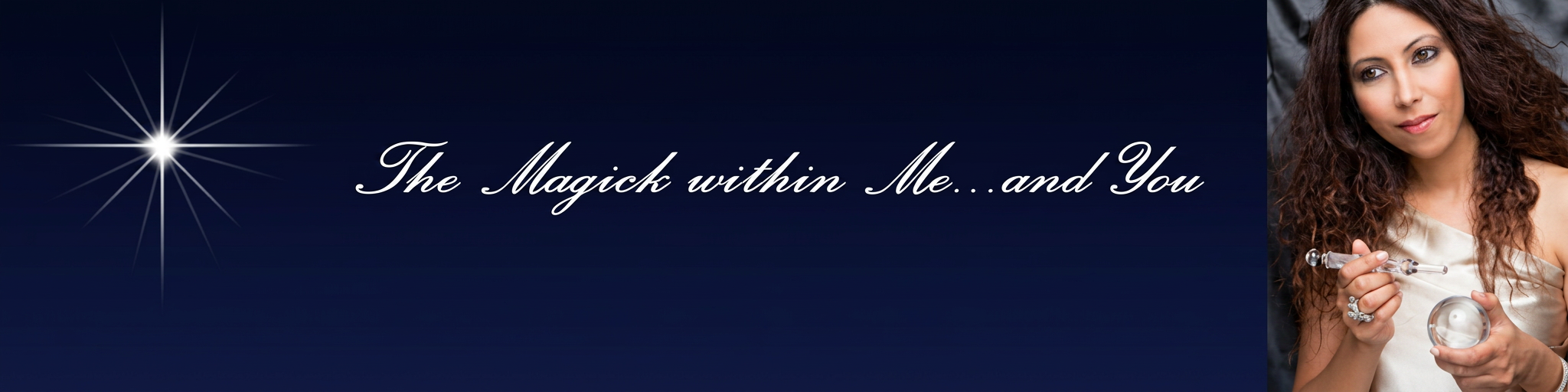


Rev. Swati Prakash was invited to represent the continent of Asia by the Museum of Tarot (Museo Dei Tarocchi) situated in Bologna Italy, to host the World’s First Litera-tarot Asia Deck of 22 Trumps (Major Arcana cards). This deck was created by 22 artists, all selected by her, in order to create the artwork which is a permanent part of the collection of Museo Dei Tarocchi, gifted to them since 2008. There were five decks created in total for this project, one from each of the five continents.
Italy is reputed to be the birthplace of the modern Tarot (called Tarocchi and Trumps in the past) and the Museo Dei Tarocchi is dedicated to preserving and curating rare collector’s Tarot decks. It is an honour for me to have been selected to host this unique and special spiritual art project.
Please read the fascinating descriptions and view the card images below with information about these artists. (Originals at the Museum).
Rev. Swati Prakash, High Pristess
MORE ON THE MUSEUM: https://www.museodeitarocchi.com
PROJECT LITERATAROT
THEME: LITERATURE OF FIVE CONTINENTS
COMMISSIONED BY: MUSEO DEI TAROCCHI, BOLOGNA, ITALY
Asia Host: Rev. Swati Prakash (Past President of Tarot India Network)
www.swatiprakash.com
LIST OF 22 ARTISTS CHOSEN BY THE HOST
Viraaj Mehta, Mugdha Sarangi, Dr. Chandrakanta Verma, Meghna Prakash, Akanksha Khanna, Vidya Naik, Vijita Behere, Dr Mansoor Mirza, Chhaya Gandhi, Raajvee Mehta, Sundeep Sarangi, Prof. Rafique Pirani, Swati Prakash, Preeti Barshilia, Janit Gambhir, Srishti Gautam, Santosh Chandran, Sandeep Mehta, Falguni Mehta, Prashish More, Sangeeta Pai, Nandini Hate-Mane
INDIA’S FIRST TRUMP DECK FEATURING SPIRITUAL THEMES
CARD AND ARTIST DESCRIPTIONS
1. CARD 0 – THE FOOL
Literature: Tenali Raman’s Panch Kavyas
This Fool card depicts Tenali Raman – also called The King of Fools and is a character known from the classical literature Tenali Raman’s Panch Kavyas. Tenali Raman was a Jester in the court of Krishnadeva Raja of the Vijaynagar kingdom. Tenali was a very clever and witty person who explained deep philosophies and solutions to problems in a very unique and funny way.

Story: A senior courtier retires from the court and this makes the king very upset so that he too stops coming to the court. Observing this Tenali also stopped coming to the court and disappeared. Out of restlessness the king went to the bank of a river to enjoy the freshness of the water and he appreciated it so much that he came there repeatedly for three days. A sage who was watching him all these days came and asked the king why he was unhappy. The king replied that the retirement of his courtiers was his concern. To this, the sage said that everyday the king appreciated the flowing water whereas each day the water he had seen before had flowed away to be replaced by new, yet gave rise to the same feelings as the previous water. So the king realized that it is not the water which is beautiful but the beauty lies in the fact that the river keeps flowing, yet retains its freshness and clearness. Similarly those who retire from his court have not really gone. The coming and going of people in our lives is a natural, continuous process. But, their departure does not stop life as many new people fit into their shoes. The king was finally happy but happier to know that it was Tenali who was disguised as the sage.
The card shows Tenali Raman with his feathered cap and gives the message that people in our life may come and go but the Fool will always remain happy.
Artist: Viraaj Mehta

Viraaj was all of ten years old and the youngest in this project being learning tarot. A student of standard five he loves everything magickal and Tarot tops the list. According to him it is very interesting and easy to use. He has learnt how to meditate on it through the help of his mother and in his words, “Since then everyday is like living in a fairyland where there is only fun and happiness all around me. I think all schools must introduce Tarot to children with a little story for each card.”
2. CARD I – THE MAGICIAN
Literature: Jataka Tales
The Jâtaka Tales (Sanskrit , and Pali) refer to a voluminous body of folklore-like literature concerning the previous births (jâti) of the Buddha. The word most specifically refers to a text division of the Pali Canon of Theravada Buddhism, included in the Khuddaka Nikaya of the Sutta Pitaka. Jataka also refers to the traditional commentary on this book.

In this card a story about a rat and a monk has been portrayed. The poor rat was being chased to death by a cat while the monk was busy meditating. The monk took pity on the rat and transformed him into a cat. Now this transformed cat was chased by a nasty dog. The monk again transformed the erstwhile rat into a feracious dog. This transformed dog somehow managed to get into trouble again and was now being chased by a Tiger. The monk still patient with the rat converted it to a mighty tiger. Once the rat managed to ward off the tiger that was chasing it, the tiger became quite hungry with all the being chased at ordeal. Looking at its transformed state and its growling stomach he looked at the meditating monk. The tiger approached at the monk with a drooling mouth thinking of the monk being an easy prey for him. The monk looked at the approaching tiger in disgust and cursed him and transformed the rat into a “RAT” again.
What this card depicts is the magical “transformation”. Also the 4 transformations can be related to the 4 elements and the 4 suits of tarot, Tiger for the raw energy of Fire (Wands), Cat for the intuition and psychism of Water (Cups), Dog for loyalty and practicality of Earth (Pentacle) and Rat for the restlessness and cunning of Air (Swords). The ‘Magician’ in this card talks of the transformation powers within us that help us take control of our lives.

Artist: Mughdha Sarangi
Mughdha is an interior designer by profession. Painting is one of her hobbies. The art works of tarot really fascinates her which her husband is also into and he inspired her to be a part of this creative project.
3. CARD II – HIGH PRIESTESS
Literature: The Recognition of Shakuntala (Kalidasa)
Kalidasa’s famous play, generally considered his masterpiece, is the Abhijñānaśākuntalam (The Recognition of Shakuntala) which tells the story of king, Dushyanta, who falls in love while out on a hunting expedition with the lovely young ascetic Shakuntala. Shakuntala is the daughter of the head sage, Kanva (who is away at the time). In fact, she is only the adopted daughter, and is actually the daughter of a royal sage and a celestial nymph who is described as under:
KING: Her bark-dress conceals the splendid orbs
Of her breasts, and reveals not their beauty
And brilliance; it seems that a sallow leaf
Has barely imprisoned a bud in the morning.
Yet her bark-garment, howsoever restrictive,
Radiates with its own brightness, as an ornament does.
Even hidden in the duckweed, the lotus glows,
And dusky scars in the face of the moon
Only heighten its radiance; thus, Shakuntala’s
Beauty is only revealed by what her bark
Conceals: her dress makes her far more attractive,
For, indeed, beauty lies in concealing beauty
……Even though she keeps her words hidden
Beneath her silences, she lends her ears
To whatever I say. And even though
She keeps her eyes downcast, she watches me
Only when I watch her not!

The king wanted to marry Shakuntala, but she being worried that a rushed and secret marriage wouldn’t be appropriate. He offered her a ring and promised to send for Shakuntala later. Still enraptured, Shakuntala neglected him and was cursed by the angry sage Durvasas as such – ‘the king won’t remember who she is — at least until he sees the ring of recollection.’ When Shakuntala arrived at the king’s court and didn’t receive quite the welcome she supposed: “this ring will revive your memory and remove your doubt”. But, alas — there was no ring on her finger ! It must have fallen off. Shakuntala had other evidence, describing their meetings, but that wasn’t enough to convince the cursed king, and he continued to worry:
Since it’s unclear whether I’m deluded
or if she is speaking falsely —
should I risk abandoning a wife
or being tainted by another man’s ?
Finally a fisherman found the missing royal ring of recollection, and the king remembered and sets off to regain her.
The card shows Shakuntala encircled symbolically in a ring which hides her truth and reveals it ultimately. It tells us that we have several secrets hidden within us that through our patience and faith will shine out and create a positive outcome if we choose to believe.
Artists: Dr. Chandrakanta Verma, Meghna Prakash


Dr Chandrakanta Verma is an entrepreneur, has been a teacher of Sanskrit and Hindi, and the owner of a recruitment firm. She has herself in the past acted in the play Shakuntala playing the lead character of the heroine. She is a poet and an artist with a great intuition and a love for Tarot. Meghna Prakash is a young entrepreneur and a Tarot researcher and reader for many years and the co-founder of Tarot India Network.
III – THE EMPRESS
Literature: Anandalahiri
Anandalahiri (Waves of Bliss) by Sankaracharya as it is composed of poetry in praise of the Goddess in her varied forms connecting with the universal aspect of Empress which is ‘beauty and bliss’.
We ever pray to Thee, O Gaurī!
Youthful daughter of the Lord of mountains.
Beautiful is the betel in Thy mouth
And the collyrium on Thy eyes;
Beautiful, too, are the saffron on Thy forehead,
The necklet of pearls on Thy throat,
Thy silken garment and the glittering gold waist-ornament on Thy large hips.
May Bhagavatī, Satī, whose lotus eyes sparkle,
Spouse of Śambhu, on the slope of whose breasts
Rests a beautiful garland of the flowers of the Mandāra tree,
Whose earring is the pleasing sound from the vīnā,
…..Who stoops (from the weight of her breasts),
Whose beautiful swaying gait is that of the female elephant
May that Bhagavatī be ever victorious!

The number Three of the card, The Empress, so clearly defines the 3 Hindu Goddesses – Sarasvati, Lakshmi & Parvati. In the most representative Hindu view, the universe is the manifestation of the creative power (shakti) of Brahman, whose essence is absolute existence, consciousness, and bliss. Since all created forms proceed from the womb of the mother, the creative power shakti of God is recognized by Hindus as the female principle or the motherly aspect of nature. In this sense we are all children of the Divine Mother. The Empress is Mother Nature. She is the life force that gives birth to all creation. She is abundant and fruitful. Everything in life is born through her. She is nature itself and symbolises the ability to connect with the planet on which we dwell. We are contained by Her before our – manifestation and nourished by Her throughout our existence. The Empress also depicts the creative power within us all. The Empress is the womb where it gestates and grows till the idea is ready to be born.
Artist: Akanksha Khanna

* Collage Adaptation of Raja Ravi Verma’s goddess from public domain
During her formative years she has lived in many different parts of India experiencing the varied culture and the exoticism of this mystical land. This experience has left an indelible impression upon her. She owes this magnificent journey to her parents. Her father is an officer in the Indian Navy having won an award for gallantry, for his endeavors at the Antarctica . Her mother has encouraged her to follow her heart. Akansha began her foray into films and is a painter at heart. Her website is http://www.blackmotionpictures.com
IV – THE EMPEROR
Literature: Shivaji
The card for The Emperor is based on Shivaji on whom a string of literature has been penned. Shivaji Bhonsle, also known as Chhatrapati Shri Shivaji Maharaj (February 19, 1630 – April 3, 1680) was the founder of the Maratha empire in western India in 1674. Using guerrilla tactics superbly suited to the rugged mountains and valleys found in this region, he annexed a portion of the then dominant Mughal empire and established the seeds of free India which was to endure until 1818. He is still considered a hero and stories of his exploits have entered into folklore.

Shivaji is remembered as a just and wise king and his rule is called one of the six golden pages in Indian history.
Samarth Ramdas Swamy who was also his spiritual guru wrote about him,
Nishchayacha MahaMeru
Bahuta Janansi Aadharu
Akhand Sthiticha Nirdharu
Janata Raja
The above verse in Marathi means:
Someone who is having very strong conviction and resolve to achieve what he decides
Someone who is fair and understands and supports his citizen irrespective of their cast, creed & religion
A wise and knowledgeable king.
The Emperor as Shivaji speaks of the need for creating a strong ethical and compassionate base before we establish ourselves strongly in the world. It highlights that respect is earned through one’s noble deeds in the world and through our wisdom and determination. The symbol of the hand stands for power that comes from the right actions taken in the world. The crown on it shows that such power only creates further responsibility and duties in the world that need to be handled with a great sense of ethics and care
Artist: Vidya Naik

Vidya is a creative entrepreneur and has also delved into the world of magic including magic shows and performances. She also discovered along the way that she has a psychic energy that helps her in her life and decided to learn more about the unseen phenomena and intuition. She has learnt tarot card reading and continues o practice it for herself and others, besides Theta healing, energy healing and other such arts. She lives and practices in Mumbai.
V – THE HIEROPHANT
Literature: Chanakyaniti
Chanakya is respected for his wisdom, philosophy and unfailing strategies, authored books like Arthashastra, Nitishastra and Chanakyaniti. His books cover a wide range of topics like statecraft, politics, military warfare, strategy, selection and training of employees, leadership skills, legal systems, accounting systems, taxation, fiscal policies, civil rules, internal and foreign trade etc. It also covers various technical subjects including medicine, gemology, metallurgy, measures of length, tables of weights, divisions of time, among many others. His work is still referred by modern day scholars and governments across the world.

The traditional interpretations of the Hierophant card are moral law, a wise and capable advisor, a practical instructor, belief system, spiritual consolation, knowledge, identification, faith, conformity, tradition. Most of the traditional interpretations and keywords for the Hierophant card describe the personality of Chanakya.
Chanakya also known as Vishnugupta and Kautilya lived around the third century BC but his ideas and principles are still guiding the present day world. He is also know as a King Maker because he played vital role in bringing down the Nanda dynasty and establishing his bright student Chandragupta Maurya as the emperor. Also the credit of the defeat of Alexander the Great in India goes to Chanakya.
The role of The Hierophant is to mediate between the ever-changing world of busy life and eternal truth. Chanakya performed the same duty. He tried to reduce the problems of the common man through his book Chanakyaniti. He set rules and standards wherever needed. He tried to reduce all sorts problems of society and organization by providing people with tactics, guidelines and principals wherever he found need to organize and to discipline. In the card, I have also tried to use some symbols. Om- Represents the merging of physical form with the spiritual. Peacock feather – symbolizes the wisdom and knowledge.
Artist: Vijita Behere

Vijita always had a great interest in Art & Design, and Divination. Because of her constant involvement in the creative activities and due to my interest and aptitude in art n design she chose to study architecture. She intends to canalize her artistic potential into a profession. Her interest in divination began many years ago; particularly palmistry but her interest in Tarot developed only three years ago. Since then she has read books, searched on the net, studied the cards, their history and meanings and collected books and deck besides conducting readings for friends and relatives. She is skilled in AutoCAD, Photoshop, CorelDraw, 3Ds MAX, Sketching, Painting, Calligraphy and Tarot Reading.
VI – THE LOVERS
Literature: The Sufi
For the great sufi teacher and poet Rumi ,love is the only force that can transcend the bounds of reason,the distinctions of knowledge and the isolation of normal consciousness. Love he experienced was not only sensual pleasure, it might be fully described as love for all things ,for creation itself, Love is a continually expanding capacity that culminates in certainty, in the recognition that there is nothing in this world or the next that is not both loved and loving.
There is no salvation for the soul
But to fall in love,
It has to creep and crawl,
Among the Lovers first.
Only Lovers can escape ,
From these two worlds,
This was written in creation.
Only from the heart you can reach the sky
The rose of glory
Can only be raised in the Heart.
—- RUMI

This card shows a Sufi dervish swirling and getting into a trance and becoming one with the divine (beloved) so that the lover and the beloved are the same , A cosmic-divine union which transcends from the earthly union –selfless –merging away of the ego, and all boundaries to become one with ONE -A state of ultimate bliss !
The moths are also rushing towards the flame –light knowing very well that they will be annihilated to become one with the flame (light). The colours from the bottom (Base) to the top (Crown) represent the seven main charkas (energy centers in the body) starting from red –orange –yellow, green, blue, indigo-violent-As the Sufi starts swirling meditation first his contact with the ground-is enhanced ,but slowly and surely it lessens to transcend to a point of no contact-all immersion in the universal love and light .
That’s divine love without any attachment ,ceaselessly ceasing to become nothing – ALL FOR LOVE !
Artist: Dr. Mansoor Mirza

Dr. Mansoor Mirza graduated in homoeopathic medicine and philosophy, attended a 9 month intensive yoga teachers programme at the yoga institute awarded by becoming a yoga teacher and has also done courses on Clinical hypnotherapy, Past life Regression ,Spirit Release ,Foreign Energy dynamics, Energy –therapy, crystal therapy, chakra therapy, light work and visualisation to cause metamorphosis in an individually-heal holistically. Having done a few courses on tarot cards he fell in love with this divination tool. He uses to all this knowledge to help himself , to evolve, help his patients heal and all others around him as well, spreading goodwill cheer, peace and love. Besides he loves traveling ,learning new therapies ,teaching ,swimming, movies and food to enjoy every moment of life. He lives with his parents, is married and blessed with a wonderful wife and daughter who was 2 and a half years old at the time of creation of the card.
VII – THE CHARIOT
Literature: Bhagvad Gita
The Bhagvad Gita can be seen as the chief literary support for the religious civilization of India. The Chariot depicts the greatest moment from the epic of Mahabharata that constitutes the discourse of Bhagvad Gita by Krishna.

The Chariot here symbolizes the will power and determination to do what is right. The Charioteer overcomes the weakness of heart and rises to fulfill his duties through his focus to fight and win. The Charioteer is the person who is not disturbed by either happiness or distress and remains steady in both. In the episode shown in the card the chariot of Arjuna is seen. Arjuna faces conflicts of the soul and the life he is leading, feeling weakened by the call of war with his own brethren. This is where Krishna comes in and delivers the great ‘Geeta-updesh’ or preaching to Arjuna.
Under the divine blessings of Lord Krishna, Arjuna understands the meanings of duty – ‘Karmanya-vadhikaraste-maphaleshu-kadachina’ – Do what you have to do without expecting any results. The card being no VII also indicates that the Charioteer is a deep thinker, is sympathetic and kind. The Charioteer always fights for what is right.
Artist: Chhaya Gandhi

Chhaya is an artist from JJ School of arts and creator of the brand Oshibana that offers an array of art and craft products of home decor and aesthetic range including those made with pressed flowers, dried spices, painted glass and other beautiful as well as innovative materials with nature as the source of inspiration. She spent her earlier years as a visualiser in a top ad agency in Mumbai. The Osibana collections are featured in a few exclusive stores in Mumbai, Bangalore and other leading cities of India. Chhaya is a mother, a spiritualist and also a gifted tarot reader and psychic.
VIII – STRENGTH
Literature: Durga Saptashi, Markandeya Purana
Durga Chalisa from the Saptashi is a text composed of a prayer of 40 verses dedicated to Goddess Durga, the cosmic source of Strength. The prayer begins with homage to Durgaa who is the giver of happiness and destroyer of all pains as she rules all three worlds – patala lok (areas of darkness and hell), prithvi lok (the earth) and sward lok (the heaven).

Strength is what you need in times of despair to fight and in times of happiness to keep it going.
The text Markandeya Purana, further describes her appearance as the most beautiful and divine when bestowing blessings and most fierce and scary when destroying evil. She takes various forms to bestow different types of blessings. She is Mahalakshmi for wealth, Annapurna for all materialities, Gauri-Parvati to compliment Shiva, Saraswati for knowledge, Amba for destruction of evil, Matangi, Dhumvati, Bhuvaneshvari, Baglamukhi, Bhavani, Tara and Bhairavi for all kinds of happiness and grandeur, and Kaali to conquer demons. Thus Durga is so strong in all her forms that prayer and faith to her will strengthen you in all days of pain and happiness. As every object of this world is subject to limitations, so is the human intellect. However the divine force which is in continuous action behind every subject and object, is beyond limitations and is as such called Shakti or Ma Durga. The same force become the thought of the subject, action of the object and later the cause of dissolution of both subject and object. The divine mother can be seen in numberless forms in the universe, yet she is the one and only Shakti, Energy or Strength.
Artist: Raajvee Mehta

Raajvee was doing her 9th grade at the time of creating this card, having chosen to design the card Strength to depict Durgaa, her favourite goddess. According to Raajvee, the strength one derives from loved ones and the lord almighty is what keeps us going through difficult situations in life. She enjoys research and designing of the cards as it is almost like a small meditation for her to open her eyes to a lot she wasn’t aware of. She says, “It brought me great pride and happiness while I did it and above all strengthened the faith in myself and my abilities. Three cheers for Strength – Jai Mata Di!”
IX – THE HERMIT
Literature: Ramacharitamanas
Śrī Rāmacaritamānas is an epic poem composed by the 16th-century Indian poet, Goswami Tulsidas (c. 1532–1623) (also transliterated as Tulasidasa). An English translation of Rāmacaritamānasa is “The Ocean of the Deeds of Rama”. It is considered one of the greatest works of Hindi literature.

Ramcharitmansa is composed in seven chapters or kaandas. Ayodhyakanda is the second chapter of Ramacharitamanas and begins with the preparations for Rama’s coronation in Ayodhya. Events described in this chapter are the exile of Rama, Dasharatha’s death, Rama’s encounter with Nishaada and the Kevata (boatman), the return of Bharata to Ayodhya and his anger at his mother’s scheming, the meeting of Bharata and Rama in the forest and the installation of Rama’s padukas (sandals) on the throne of Ayodhya with Bharata as regent.
This version of card The Hermit shows Rama in his exile that also led him to achieve the great deeds that culminates in his eternal glorification. The Hermit tells us that we need to take the path of wisdom, sometimes bereft of materialistic pleasures, a period where we go through hardships and solitude, but emerge out as a winner who gains self respect in the end.
Artist: Sundeep Sarangi

An architect by profession, Sundeep picked up an interest in Tarot during Dec-2006, and by mid 2007 had amassed a collection of 50 Decks and around 35 books on the interesting subject of tarot. He is mostly self taught in the subject of tarot and finds the archetype and imageries in the tarot cards quite intriguing. Most often it is the imageries in the artwork of the tarot that kicks off his intuition regarding making an interpretation of a tarot reading.
X – WHEEL OF FORTUNE
Literature: Mahabharata
Mahabharata is said to be one of the greatest epics of human history. The central point of this story is the game of Chaupar. This game is a board game based on the throw of dice.
In Mahabharata the cunning uncle Shakuni of the Kauravas incited the Pandavas to play a game of Chaupar in which Shakuni chose to use dice made of the bones of his ancestors which always favoured him. In this way he succeeded in making Pandavas lose their kingdoms, themselves and their wife Draupadi (who was wed to all five Pandavas).

The Kauravas attempted to insult Draupadi, (to avange in return of an earlier incident in which she had ridiculed the Kaurava Duryodhana) by dragging her by her hair and by stripping her in the court. However Draupadi invoked Lord Krishna who appeared with his Sudarshana Chakra (a radiant wheel) from which emerged an endless stream of fabric that extended as Draupadi’s garment, thus preventing her from losing her modesty. The Pandava Bhima angered at the behavior of the Kauravas vowed, “May I never reach Heaven or meet my ancestors hereafter if, for these deeds of sin, I do not break the knee of Duryodhana in battle, and drink the blood of Duhsasana (one of the Kauravas)!” This is the incident that formed the background to the great war.
In the card the board of Chaupar is shown painted in red and white to symbolize the two opposites. Around it is draped the fabric of Draupadi’s robe which emerges from the wheel of Krishna to be made infinite in length, symbolizing the infinite potential of creation that exists if we open ourselves to the Divine. On the four corners of the Chaupar are the four symbols of the battle of Mahabharata, Swords (air), COnch Shells (water), Mace Clubs (wands) and Shields (earth), symbolising the different aspects of worldly existence that present challenges to us and help us in our learning process.
As the Wheel of Fortune, Chaupar teaches us that fortunes can change suddenly through folly or guile, but through our determination and will power we can reverse ill fortunes and restore our victory.
Artist: Prof Rafique Pirani and Swati

Rafique Pirani is a mathematics professor as well as a leading astrologer who also is well versed with Reiki, Feng Shui, Crystal Therapy, Tarot, Angel healing, Flower Therapy, Runes, Mantras, Yantras, Vedic Mathematics, Graphology, Logic and Philosophy He has conducted several workshops and delivered several lectures. He believes joy is a great quality of the soul and doing that which gives us joy helps us fulfil our soul purpose. Swati is an entrepreneur and Tarot reader who works with Tarot as a transformational and healing tool. She has conducted numerous workshops and seminars on Tarot and its applications. She has been into the mystical and magickal arts since childhood and has in the last seven years attempted to create more awareness about Tarot as a spiritual tool. She lives and practices in Mumbai and is the founder of Tarot India Network. She hopes to bring out more and more transformation with the use of Tarot as a helping art.
XI – JUSTICE
Literature: I Ching – The Book Of Changes
The I Ching is one of the most ancient texts in the world and is called The Book of Changes, arguably the most widely read of the five Chinese Classics. The book was traditionally written by the legendary Chinese Emperor Fu Hsi (2953-2838 B.C.). Futher commentaries were added by King Wen and the Duke of Chou in the eleventh century B.C.. The I Ching can correctly be described as an explanation of the laws of change in the universe and of how human beings can learn to live in harmony with these laws. The card drawn here is inspired by this ancient Chinese oracle and spiritual literature. Medium used is a mixture of charcoal and digital.

An I Ching interpretation is performed by making six binary decisions (a hexagram). This is called ‘casting the I Ching’. These are written down as a stack of six solid (Yang) or broken (Yin) lines. The basis of the hexagrams is that combinations of Yang and Yin lines form eight trigrams, and permutations and combinations of eight trigrams in pairs, with one below and one above create sixty-four hexagrams, each with their own meanings.
It is said in the I Ching that, “The great attribute of heaven and earth is the giving and maintaining life. The right administration of wealth, correct instructions to the people, and prohibitions against wrong-doing; these constitute his righteousness.”
In the present card, the symbol of Hexagram number eleven called T’ai – conveying the idea of Perfection and Peace is drawn. The lower trigram Khien, composed of three undivided lines, is the symbol of heaven (strength and action) and the upper trigram composed of three divided lines is the symbol of earth, (receptivity). Earth as trigram Kun, being supported by Heaven in hexagram eleven is the symbol of perfect balance and rising above of problems by never leaving the path of righteousness and truth.
Artist: Preeti Barshilia and Swati

Preeti was introduced to divination when she started making predictions with playing cards and found it fascinating. She has been following her intuition for years now while learning more and more about the subject. She has a career in Human Resources in which she finds intuition to be an invaluable tool to be used whenever the need be. She loves nature and the outdoors and loves spending her free time doing constructive and creative work.
Swati is an entrepreneur and Tarot reader who works with Tarot as a transformational and healing tool. She has conducted numerous workshops and seminars on Tarot and its applications. She has been into the mystical and magickal arts since childhood and has in the last seven years attempted to create more awareness about Tarot as a spiritual tool. She lives and practices in Mumbai and is the founder of Tarot India Network. She hopes to bring out more and more transformation with the use of Tarot as a helping art.
XII – THE HANGED MAN
Literature: Baitaal Pachisi
Baitaal Pachisi or Twenty Five Tales of Baitaal is about a king named Vikramaditya and a spirit named Baitaal who could inhabit dead bodies. The king was urged by a sage to go to an old tree and fetch the body of a corpse for the purpose of a yagya or ritual that the sage had to perform. As king Vikramaditya went to the ancient tree whose bark was glowing as if on fire in the dark hour of the night he noticed the lean corpse hanging from one of the branches, suspended upside down magically from its toes. Fearlessly the king brought the corpse down and noticed that it was wailing. As soon as he uttered, ‘Who art thou?’, the corpse who was actually Baitaal flew like a wisp and hung back up on the branch. This repeated six times and the seventh time noting the Kings obstinacy, Baitaal agreed to be taken by Vikram through the forest. On the way Baitaal, who was actually a wise spirit, proposed to entertain the travellers with witty tales at the end of which he was to pose a question to the king. The present card shows Baitaal in its spirit like form hanging by the ancient tree and the medium used is wood, tree foliage and oil.

Baital spirit declared, “Whenever thou answerest me, either compelled by Fate or entrapped by my cunning into so doing, or thereby gratifying thy vanity and conceit, I leave thee and return to my favourite place and position in the siras-tree, but when thou shalt remain silent, confused, and at a loss to reply, either through humility or thereby confessing thine ignorance, and impotence, and want of comprehension, then will I allow thee, of mine own free will, to place me before thine employer.” And so began the tales, each one cleverer than the other. After each tale King Vikram, forgetting Baitaal’s advice spoke out the answer and each time Baitaal flew back to the tree and hung itself upside down. The twenty-fifth time the King remained silent and this is when Baitaal, finally pleased at the King explained to him that the sage was actually an evil magician who intended to kill Vikramaditya to complete his ritual and this way the life of King Vikramaditya was saved as he went with alertness and killed the evil magician.
The tales of Baitaal Pachisi tell us that it is important to keep silent, to subdue ones ego and to sacrifice ones vanity, haughtiness and conceit to gain that knowledge which is important for oneself. This literature also indicates that sometimes delays on ones journey may be there but they are meant to teach us something without which the journey would be meaningless.
Artist: Swati Prakash

Swati is an ex-PR entrepreneur and Tarot reader who works with Tarot as a transformational and healing tool. She has conducted numerous workshops and seminars on Tarot and its applications. She has been into the mystical and magickal arts since childhood and has in the last several years attempted to create more awareness about Tarot as a spiritual tool. She lived and practiced in Mumbai at the time of the creation of this card deck as the founder of Tarot India Network. She hopes to bring out more and more transformation with the use of Tarot as a helping art.
XIII – DEATH
Literature: RigVeda Samhita
Legend has it that Sage Markande was born of parents who were Lord Shiva devotees as Lord Shiva appeared before them and blessed them with a child. But he gave them an option… they could either have a son that would be evil and live a 100 years or a pure hearted son who would only live to 16 years. The choice was easy; they picked the pure hearted Markande and brought him up as a Shiva devotee. As the fateful day approached… Markande went into deep meditation and started to pray to Lord Shiva. In time Yamaraj, the god of death arrived. But even death cannot harm those who have the favour of Lord Shiva… and the meditation could not be broken. The god of death conceded helplessness. Markande went on to dedicate his newly granted life to Shiva and the prayer came to be called the Maha Mrityunjaya Mantra.
“Om trayambakam yajaamhe
Sugandhim pushti vardhanam
Urvaru kameev bandhanaat
Mrityurmukshiya mamrataat”
Meaning – let us worship Shiva, the three eyed one who is sacred and fragrant and nourishes all his beings. Just as the cucumber ripens and is released from it’s attachment to the creeper, may we be liberated from death (and everything associated with) and be granted and realize our immortality nature. Mrityunjaya as an avatar of Shiva is prayed to in order to free man from fear, from fear of death, ill, suffering and death itself.

The image is Markande surrounded by the fire of mortal existence set against a backdrop of the clutter and colour of life. Shiva is aware and watchful, and the trinity (Trishul-Shiva’s spear) of existence exists all around… creation preservation and destruction… past present and future. Nandi (Holy cow- Shiva’s primary disciple), appears close to Markande, marking that Shiva is nearby and also total surrender to the lord is the need of the hour. The watchful lord Shiva watches with his son, The lord Ganesha… signified by spheres or the cycle of life and inverted triangles or the God’s reaching down to earth emphasizing on the understanding… and that if Shiva wills it, life goes on (Ganesha’s head was severed and replaced with that of an elephant’s by Shiva).
Death the card stands for closure of things, or in other words a part of us dying. But only when a chapter ends can another begin. Within the Mrityunjaya story is a lesson to be learnt. Fear not from death and suffering and all shall pass for a better life ahead. Life rescues us from the clutches of destruction only to grant us a second life, something we all feel many times over in our lives. There is a divine plan… and our experiences teach us, change us, shake us into the many lives we live within one. Death card is nothing but a juncture – often a new lease on life.
Artists – Srishti and Janit Gambhir
This card has been prepared by the sister/brother duo of Srishti Gautam and Janit Gambhir. Srishti Gautam nee Gambhir is a designer by profession, a self confessed workaholic. Bound by the career she has chosen, till it gives her the means to pursue freedom. Janit Gambhir is a film maker by profession. At least for the most part. Film is his betrothed and the callings of his soul his mistress. And therein lies his eternal conflict. Janit’s quest in life is for perspective and understanding. To understand boundaries of human existence in order to realize that they exist only in perception. Janit is an energy healer by day as well teaching and teaching Reiki, energy work, tarot and energy massage.
XIV – TEMPERANCE
Literature: Mahanirvana Tantra
The Indian Tantras are numerous and constitute the Scripture (Shastra) of the Kaliyuga, Shiva says: “For the benefit of men of the Kali age, men bereft of energy and dependent for existence on the food they eat, the doctrine, O auspicious one! is given”. To the Tantra we must therefore look if we would understand aright both ritual, yoga, and sadhana of all kinds, as also the general principles of which these practices are but the objective expression. Mahanirvana Tantra is the Tantra of Great Liberation, translated by Arthur Avalon in1913. The card depicts the sadhak in posture with the lotus opening and the spiritual fire being stirred inside that invokes the kundalini energy to rise upwards. The darkness on one side and the light on the other side of the picture present the two opposites that await unison. The spiritual sustainer of all lives at all levels of being has a contented understanding that we have access to the spiritual energy needed to bring about a change in any aspect of our life that has slipped out of balance.

The lotus is a symbol of duality and transcendence – each petal a part of your spiritual understanding, yet the stem anchors it to the earth and makes the growth of the lotus healthy and vigorous. That force comes from within you, from the mundane body, the ‘Me’ and you can achieve many marvellous things such as healing or using the force to help you through your life. You are developing your spirit, the real you, the ‘I’, representing the lotus as the duality of ‘I’ and ‘Me’ as one. Almost from your first birth you have loved with the duality of the spirit living in the body shell, ‘I’ and ‘Me’. In some ways there is a conflict between two parts of your being, yet each needs the other. ‘Me’ is the source of physical demands, constantly pushing you, wanting attention. ‘Me’ wants to be fed, ‘Me’ is tough in looking out for itself against the world for the whole of your life. ‘Me’ has the opinion that if ‘I’ turns its back ‘Me’ will become possessed and will die and ‘Me’ doesn’t want to die. It has the bodily appetites still to fulfill. It is all about convincing ‘Me’ that ‘I’ having its own time represents no threat and will actually be beneficial to ‘Me’ because during I’s trip it will be looking for things that will help ‘Me’ satisfy the majority of ‘Me’s immediate demands and then say, its time for ‘I’. If you don’t let ‘I’ go, ‘I’ will be mad at ‘Me’ and will in future not satisfy ‘Me’s appetites. Its whole idea is to focus all the attention into a single point in time for one instance. It is about learning to design to raise your force and to teach you to control your body functions. As the lotus petals open they reach upwards and outwards, gathering in the sunlight and dewy moisture that gives them life. You too can reach out and develop spiritual communication and absorb the psychic energy to revitalize your life.
Artist: Santosh Chandran

Santosh has worked with Tarot for many years of research, learning and development. He has also got some insight of astrology, numerology, palmistry and other medium of divination. These subjects has been a hobby from the time he was 1. He met some like minded friends who encouraged him to take this learning to next level. So the idea of developing a tarot deck was formed. According to him tarot is a good medium to connect with your inner self/inner voice. He has authored a book Discovering Tarot…” A Tool to be in terms with Life” that contains the basic insight about tarot, created for people as a meditative tool to create awareness of the basic gifts that each humans are given. He has also created a deck Nature’s Whisper…(A Whisper can bring hope) – a 78 card non-traditional deck merged to find the traditional card energy in natures form with traditional and non-traditional names and their elements on it.
XV – THE DEVIL
Literature: Bhaktamar Stotr
The card no XV of major arcana, called The Devil can be related to the classic called ‘Bhaktamar Stotr’ from Jain literature. Bhaktamar Stotra is a gem of devotional literature. This incessant devotion of the first Jain Tirthankar Adinath can make a devotee immortal. The author of Bhaktamar Stotr, Acharya Shri Mantunga was a missionary monk and an eminent scholar.

According to this text the king of Avanti, Vriddha Bhoj, seated on his throne of Dhara Nagri had chained and imprisoned the Acharya Shri Mantunga out of curiosity to witness some miracle. He was bound with a thick chain and there were 48 locks on the chain. Acharya was challenged that if he has great faith then he should use the power of faith to free himself.
The acharya remained in meditation for three days and on the fourth morning composed the panegyric in honor of Lord Adinath. The moment he chanted the first couplet, the chains and shackles of the first lock opened. Likewise he chanted 48 couplets to open 48 locks and finally walked out a free man. The king was astounded by this and fell to the Acharya’s feet to become a staunch devotee of Adinath.
The card The Devil also shows that if the Devil binds you in chains and shackles of problems and troubles, faith will break all the locks and chains, and set you free.
Artist: Sandeep Mehta

Sandeep was introduced to Tarot by his wife who became his guide and as he saw the accuracy to be perfect most of the time he got more and more interested. Sandeep is a director of a financial firm and states that Tarot has helped him make difficult decisions and at all given times the guidance has been ‘on the dot.’ He chose the card The Devil as he feels that at any given time we are involved in shackles of uncertainty, adverse situations, adverse planetary positions and circumstances. According to him, “It is a personal experience for me that the Jain text – Bhakramar Stotr by Acharya Shri Mantunga conveys – that faith in God sails you through, so have faith and enjoy freedom.”
XVI – THE TOWER
Literature: Chandrakanta
Chandrakanta and Chandrakanta Santati were written by Babu Devakinandan Khatri in the late 19th century as a fantasy fiction in an Indian context. Chandrakanta is about a prince Virendra Singh, who is in love with the princess Chandrakanta of a rival kingdom.

A villain Krur Singh conspired to trap Chandrakanta into a ’tilism’, a magical maze in a fort which is there to guard a hidden treasure trove. Virendra Singh and Chandrakanta have to ensure that their love wins against evil villains and rival ‘aiyyars’ (shapeshifters), who are super-spies with magical powers and experts in all modes of warfare. Virendra Singh has his own group of ‘aiyyars’ to support him. The novel is a masterpiece of magic, treachery, deceit, bravery, and above all love at it’s best!
In this card the tower is composed of black and white mazes, symbolizing ‘Tamas’ or duality and darkness, that is complimented by light. They seem burst out due to the lightning bolts symbolizing the knowledge received through the red bolt of ‘Rajas’ or active energy and the White bolt of “Sattva” or purity. The butterflies symbolize the freedom experienced with this release from darkness. The Purple light emerging carries the transformative powers and the black cat that is seen shape-shifting into nine snakes show those magickal powers which we fear, but at the same time if used on the side of goodness and truth can help one as a friend and an ally. The Tower card shows the struggles and magical battles for the ’tilism’ of our duality and confusions to be broken so that we can come back into the light. The message is that destruction of that which separates you from your final goal is a must and should never be feared.
Artists: Swati and Chandrakanta Verma
The duo of Swati and Chandrakanta Verma have come back together and collaborated for this card to create a digitalized modern visual for a tale of the past that is full of mystery and magic. Dr Chandrakanta Verma is an entrepreneur, has been a teacher of Sanskrit and Hindi, and the owner of a recruitment firm. She is a poet and an artist with a great intuition and a love for Tarot. She has done research on literature and including all the seven books of Chandrakanta and Chandrakanta Santiti that are equated by the westerners as an epic comparable to Lord of the Rings. Swati is an entrepreneur and Tarot reader who works with Tarot as a transformational and healing tool. She has conducted numerous workshops and seminars on Tarot and its applications. She has been into the mystical and magickal arts since childhood and has in the last several years attempted to create more awareness about Tarot as a spiritual tool. The founder of Tarot India Network, she hopes to bring out more and more transformation with the use of Tarot as a helping art.
XVII – THE STAR
Literature: Atharva Veda
The Star card from Tarot can be described as the Shree Yantra in Vedas and Vaastu Shastra. The Shree Yanta has divine origin and is the symbolic form of all Gods and Goddesses. It shows the origin and formation of the entire universe. The Vedas explain Sri Yantra as a scientific, cosmic and planetary energy zone.

Vastu Shastra says that all constructions based on Vaastu must essentially have Shree Yantra in it.
Shree/ Sri means money and Yantra stands for equipment or instrument. Thus it is an instrument to all materialistic pleasures of the world. Sri Yantra is geometric in shape and has many constructions of circles, triangles, points, lines and angles. In the centre of the innermost circle is a point around which are nine triangles, of which five point downwards (towards Shakti or power) and four triangles point upwards (towards Shiva, the essence of static wisdom). The triangles are arranged in such a way that they produce 43 subsidiary triangles at the centre of the smallest of which is a big dot (bindu). The smaller triangles form the abodes to different gods. The outer ring consists of an eight-petaled lotus enclosed by a sixteen-petaled lotus girdled in turn by three circles all enclose in a square with four doors, one on each side. The square represents the boundaries within which the deities reside protected from the chaos and disorder of the outside world. The upward triangles indicate the fire element, circles indicating Air, points indicating Sky, base indicating Earth and downward triangles indicating Water. The entire Shree Yantra shows the complete life cycle of the universe. The possession of a mere glimpse of Shree Yantra brings universal abundance to life.
Artist: Falguni S. Mehta
Energy medicine is the subject of interest for Falguni and as a healer she has always sought natural and cosmic means to heal, energise and empower the lives of people, friends and family. Tarot mystically and amazingly turned out to be a wonderful source of guidance and healing and so she calls it a friend, philosopher and guide. According to Falguni, “There is so much one can do with Tarot that I feel one lifetime is les to totally explore it. It truly is the ‘Star’ in my life. While researching on tarot I unknowingly and subconsciously healed several sections of my life. If it has subconsciously helped so much, surely it can consciously create miracles. I intend to use it to create magic in the field of energy medicine. Let the Star illuminate my path of healing to bring wellness to all sections of life universally.”
XVIII – THE MOON
Literature: Panchatantra
The tales of Panchatantra, perhaps, are the oldest stories known in the literature of India. The dates of the Panchatantra are not known and these tales are usually attributed to Vishnu Sharma. Some believe that the fables of Panchatantra are as old as Rig-veda. The story depicted in the present card – The Moon is aptly called ‘The Moon lake’.

Once a large herd of elephants lived in a jungle. They had to find water as quickly as possible during a draught and made their way to a lake while trampling upon thousands of rabbits on the way. One little rabbit stood up and volunteered to become a messenger to the king of the elephants. The little rabbit took the huge elephant to the lake proclaiming to be a messenger of the Moon who was angry with them for trampling upon rabbits. There they saw the Moon reflected in the still waters.
The elephant dipped his trunk into the water whose surface was disturbed. The Moon seemed to move to and fro. The rabbit said, “Now the Moon is angrier than ever.” The elephant king said, “Please ask the Moon to forgive me. Never again will we touch the holy waters of this lake. Never again will we harm the rabbits whom the Moon loves so much.” And the king and his herd went away. Soon there was rain and the elephants lived happily. It did not occur to them ever that a little rabbit had fooled them.
The Moon card from Panchatantra teaches us that there may be deception on our way at times but it is just a facade to hide the greater truth and goodness inside symbolized by the hidden rabbit. It teaches is the importance of being brave in the face of danger and trusting our higher self to provide us with an imaginative solution whenever in a dilemma.
Artist: Dr. Chandrakanta Verma
For this card Dr. Chandrakanta Verma has taken inspiration from the age old stories of Panchatantra to highlight the meaning of this fascinating card. Dr Chandrakanta Verma is an entrepreneur, has been a teacher of Sanskrit and Hindi, and the owner of a recruitment firm. She is a poet and an artist with a great intuition and a love for Tarot.
XIX – THE SUN
Literature: Ramayana
One of the greatest epics from the Indian literature, Ramayana elaborates the stories of Lord Rama, an incarnation of Vishnu who protected earth and defeated demons. Hanuman, in a monkey god form, was his trusted messenger and hero who rescued the goddess Sita and saved the life of Rama’s brother as well as defeated demons and burnt Lanka to free the kingdom from the demon king.

Hanuman, or Aanjaneya, was born to Anjanadevi and Vaayu, the wind god. Extraordinary from the moment of birth, there are fascinating stories about his childhood. The most famous story is the one that led to his name, Hanuman. One day, as a child, Hanuman was hungry and looking upto the sky, he saw someting glowing in the east. To him it looked like a delicious orange and he flew up to grab it. Despite the heat that searing him, Hanuman flew closer and closer to the sun. So close he was that Indra, the mighty rain god, feared that this child would indeed grab the sun, and therefore he hit Hanuman with his powerful weapon, the vajrayudha (thunderbolt). The blow made Hanuman fall back to the ground and his face swelled up, leading to his name Hanuman as Hanu means cheek in Sanskrit.
The story of Hanuman and The Sun describes the innocence, faith and joy that leads even a child to accomplish great tasks, to challenge even mighty conquerors and to be glorified in legend.
Artist: Prashish More

An arts graduate from Mumbai’s famous Sir JJ School of Arts, Prashish More, at the time of creating this deck, was the art director of Elle magazine, India. He is responsible for visual direction, layout, design and production of the magazine. Working with photographers, designers and illustrators, Prashish has brought a high level of design sophistication to ELLE India. His strengths are a strong visual instinct, a talent for illustrations and precision in execution of projects including a fashion exhibition in Paris in 2009. For more information log on to www.prashishmore.com
XX – JUDGEMENT
Literature: Vishnu Purana
Vishnu Puran describes the four personages of Vishnu, the first reclining on Shesh [The Snake bed], the second nurtures creation, the third assumes an avatar [Incarnation] and reinstates righteousness [Dharma] and the fourth destroys unrighteousness and demons.

Vishnu has been described as existing in various forms in creation, the first unmenifested Brahma, The second as the creator Prajapati, the Third as Kal [time] and the fourth in the form of the animate and the inanimate creation.
The ten avatars of Vishnu are Matsya [the fish],Kurma [the tortoise],Varaha[the boar], Narsinha[the man lion],Vaman[the dwarf], Pushuram, Rama, Krishna, Buddha and Kalki. In each Avatar Vishnu appears to redeem the world and manifests his divine being into the life of man whenever evil threatens it. He will destroy the evil and preach spirituality, helps his followers to lead and rule the world righteously. The blue god Krishna gave the Geetopdesh to mankind on the battlefield of Mahabharat. Similarly each avatar of Vishnu gives a divine message and guidance that transforms the world greatly. The final avatar called Kalki is expected to herald the end of darkness and the dawn of a new age on our planet.
As the Judgement card, the Vishnu avatars tell us that we must hear the voice of the divine, and respond to it now in order to join forces in the creation of a wonderful reality for the world we live in.
Artist: Sangeeta Pai
Sangeeta Pai an Architect by profession, married to a Doctor was always interested in the occult. While traveling through Barcelona she had an encounter with a Tarot reader and wanted to know more. On her return to India, to unable her to counsel and help her children resettle, she also took to chakra and crystal healing, along with Numerology and Bach flower remedies. Fascinated and proud of the vast treasure of holistic medicinal therapies available in the country of her birth she seeks to grow in spiritual knowledge by constantly acquiring and sharing.
XXI – THE WORLD
Literature: The Teaching of Buddha by Bukkyo Dendo Kyokai (Buddhist Promoting Foundation – Tokyo Japan)
The 21st card of the Major Arcana, The World signifies completion and the end of The Fool’s journey. Eternal truths on the path of Buddhism will guide and enlighten everybody in this world. These are likened to the eight spokes of The Dharmachakra or the Wheel of Dharma, a common Buddhist symbol and represent the ‘Noble Eightfold Path of Buddhism’. A lotus growing from the mud (sanmsara), appearing clean on the surface (purification), producing a beautiful flower (enlightenment). The world is full of desires and in trying to fulfil these desires, one gets sucked into the cycle of life and death or rather the cause and effect of ‘ Karma’. Complete freedom from this cyclical renewal and destruction is attaining ‘Nirvana’ or ‘Spiritual Enlightenment’. In Sanskrit, in the word Nirvana – ‘Ni’ means negation or without and ‘Vana’ means weaving or craving.

The four corners of the card are occupied with four different coloured lotuses that are coupled with the triangles showing the stable four elements of Air, Water, Earth and Fire. The White Lotus – Spiritual perfection – Air – Clouds. The Blue Violet Lotus – Water – Waves. The Green Brown Lotus – Earth – Mud and Vegetation. The Red Orange Lotus – heart’s passion and love – Fire – Flames. The Triangles represent the Four elements of Fire, Water, Air and Earth. The two hands’ gesture refers to the Turning the Wheel of Dharma while in meditation. The gesture of the right hand stands for turning the wheel of Dharma, while that of the left hand symbolizes meditation. The open palm blesses everyone who seeks the path of Buddhism or enlightenment. Maroon background – Colour of the Buddhist Robes. Meditating Buddha – Ultimate salvation. The sign of infinity in red is also the Ouroboros and it reinforces the endless nature of the universe. Within the upper loop is the yellow flame of enlightenment with eight rays that emit endlessly in every direction.
The most subtle and primary meaning that is put forward by this card is of ‘infinity’ and ‘continuity’. Destruction that assures renewal; Life that will come after Death; Putting one’s self First and Last in the cosmic order; viewing the macro and micro aspects of existence from the ‘Outside’ so that it gives you the ‘Inside’ perspective.
Artist: Nandini Hate-Mane
Mumbai-based Nandini Hate-Mane is a spiritual healer and Tarot reader. She has founded the Inner Voice Academy, where she regularly imparts knowledge and does counseling sessions in Tarot, Hypnotherapy and Tealeaves. Her initiation into the Tarot began almost fourteen years ago before this, and her journey thereafter has been peppered with a lot of other initiations namely Reiki, Sp. Kinesiology, Pranayam and Meditation, NLP, Aromatherapy, Transcendental Meditation, Counselling, Spiritual Science – Past Life Regression, Hypnotherapy and Tealeaves. She was at the time of this creation, working on a novel and short stories collections that give insights in the different realms of spirituality.
THIS CARD DECK WAS ONLY AVAILABLE FROM THE MUSEUM OF TAROT, ITALY: https://www.museodeitarocchi.com/
PRESS REVIEWS:


For any details on the Asia Deck please contact Rev. Swati Prakash.