

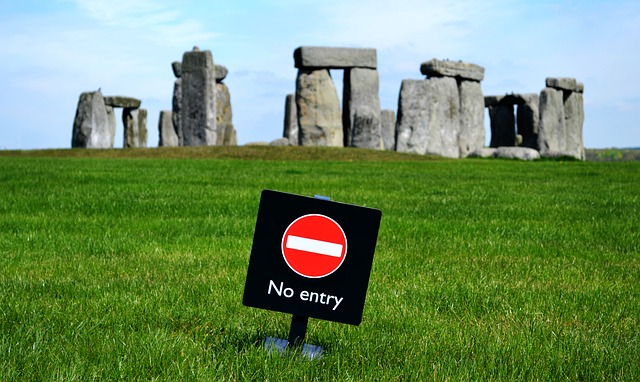
Pagan and ancient spirituality have been believed to be earth-friendly and nature worshipping at large but the global traditions of animal sacrifice and slaughter can be shameful. While ancient stoneage paleolithic folk are believed to have hunted animals with raw flintstone weapons leading to extinction of giants and wildlife such as wooly mammoths, wooly rhinos and aurochs, domestication of animals took place later on as evidenced in mesolithic and neolithic societies. Sacrifices of animals were conducted in and around megaliths or stone circles where domesticated animals were slaughtered en-masse.
While stone-circle enthusiasts enjoy the enchantment of pagan drums, travel through ley-lines across sacred pilgrimage sites and imagine a connection with aliens and higher ascended beings within them, the truth may be hard to bear at first, yet much evidence has been discovered lately to confirm this kind of ritual slaughter and feasting.
In the previous article in this series we examined some new evidence by researchers who discussed that large numbers of pigs were slaughtered in stone circles and henges in Britain, after being forced to travel a long and weary journey to be regularly feasted upon in rituals. We also discussed how religious sites for rituals have tradtionally involved animal slaughter, including Biblical temples as well as modern day Mecca and Jerusalem.
But did you know that the tradition of stone henge and megalithic constructions is found even today in certain tribal communities such as Indonesian Samba and Indian Maram tribes and answers some key questions of how and why the construction of stone circle megaliths was undertaken?
As expected status, authority, power and control of livestock was associated with the designation of nobility and elders who were venerated in religious rituals and festivities. The rituals centerted around use of domesticated animals to pull the stones for construction, and then to be victimised and killed for food in honour of the human community at the stone sites to uphold feasts held to support the traditions and ancestors along with burial of dead human relatives.
In another earlier research entitled Significance of Monuments by Bradley, 1998 it has been discussed that the monolithic or megalithic monuments in northern Europe were found adjacent to the first domesticated animals. Buried human remains excavated from tombs includes animal body parts, teeth, antlers, meat, fish as well as sacificed dogs and puppies in some cases possibly after using dogs for hunting and herding other animals. Monuments were constructed to withstand seasons and be a permanent marker of land as domestication of animals also marked control of humans over the earth. Males were also valued and buried ritually with objects.
A distinction was made between two types of monuments in Neolithic era, the long barrows, long mounds or long flat houses which were probably domestic and storage areas or burial pits and the circular erect-stone enclosures of rings that seemed more significant for ritual and were surrounded by ditches and trenches that were were reconstructed if filled up to enclose certain stone circles, perhaps to restrict access and control movement around the stone circle.
A large sampling in a scientific study of pig maxillary jaws and teeth recovered at Durrington Walls, Britain’s largest henge monument evidenced that several large herds of little pigs were brought to the site to provide meat for predominately winter-based feasting events, and these were babies of less than one year old killed predominantly in winter for seasonal ritual celebrations. With the evidence from the recent laser-scanning of Stonehenge this adds to the theory that stone circles were for marking the solstice of midwinter more importantly than midsummer to slaughter fattened animals after autumn was over and before they lose weight in late winter. In contrast remains from houses and burial sites reveal a more consistent pattern of lower level killing of slightly older pigs of 2 years age for consumption throughout the year in households and the remains of pigs ritually slaughtered and buried in pits when the houses were abandoned. Ceramic residue sample revealed dairy and beef fat as well.

A latest multi-isotope study by R. Madwig et al in 2019 as discussed in the previous article in this series had earlier demonstrated that not only the Priseli stones but also pigs were brought from far off lands such as Wales travelling over a 100 kilomoeters at times to the sacrficial site along with the pilgrims.
However another study of July 2019 published by Cambridge University Press has shown that pig grease might be used for transporting stones on the megalithic sites on sledges for construction of Stonehenge and as evidence for large scale feasting over murdered remains at Stonehenge in 2500 BC.
A massive research on the megalitic tradition of West Sumba, (Adams, Simon Fraser University, 2007) re-examines literature of previous studies and eyewitness accounts of the continuation of the ancient practice of megalithic site constructions prevalant even to this day which makes West Sumba, Indonesia unique in the world. As the structures are impressive in size and dimensions and require large amount of labour to be erected, there are possible socio-political connections with structures around the world in the prehistoric tradition of megalithic stone structures.
The researchers comment that the value of animals for meat was much higher than that of plants as 350 kg of rice could be exchanged for a water buffalo and pig or horse of equivalent value, a small pig the worth of five small chickens. The status or class and ranks of people depended on the owned cattle and loans which were settled in rituals annually. Nobles held elaborate funeral ceremonies or rituals as they had more domesticated animal slaves and land, and sacrifice a large number of animals on sites, while human slaves could not have large rituals and were buried under the tombsor dolomens of their owners. Wealth is patriarchial in the culture and male babies may be adopted by the nobility by sacrificing a pig or in exchange of animals. Marriages were also useful for wealth and dowry exchange.

Livestock is used in the Sumba communities of Indonesia to drag heavy stones to megalithic construction sites and livestock slaughtered for feast in the end of the tiresome journey of the hungry animals. Thanksgiving, ancestral house building, tomb building and several kinds of ritual feasts including lavish feasts called wolekas are organised regularly with hundreds of animals slaughtered and special motifs carved in the end on the posts in case ancestral buildings were rebuilt. It took several years to build heavy stone megalith tombs and dolomens and families needed to acquire cattle and pigs over several years to be able to organise the rituals with several animals killed for planning meetings with the clan and given as payment to conduct various parts of the process such as stone cutting, quarrying, digging to many animals were decapacitated and consumed.
Before modern times which requires use of trucks to move stones, several horses, water-buffaloes, pigs and goats as well as older male children besides adult men were used to transport the stones, tie them with vines or ropes and pull the carts or sledges from across the lands to the special megalith construction sites. Throughout the lengthy journey several animals were sacrificed to pay for the workers. From 150 men for smaller projects to 2000 men for larger stones can be needed to pull the large stones of several tonnes weight. The erection of the tombs was with much fanfare and ritual singing or chanting. The larger the number of people invited from all over the lands, the more the animals slaughtered for feasting and partying. Comparison of Sumba culture of megaliths with similar tomb cultures of Madagascar, Korea and other cultures including Britain have been made throughout the detailed report.
Photographic evidence of the tribal people of Sumba, Indonesia and some of their Shamanic annual blood-letting, sacrifice and augury cremony termed Pasola as well as lunar blood sports under the waning moon in the cult in the monolithic system surviving to date is found on websites.
An Indian megalithic tradition and surviving culture of primitive Maram tribe of Manipur, India reveals an impressive stonehenge structure as featured in a paper on The Maram Megliths and their Associated Rituals by P. Binodini Devi, P.G. Department of Anthropology, D.M. College of Science, Imphal. Eight types of megaliths found in each Maram village are described namely, Beitung (witness stone) a large stone megalith where animals are ritually sacrificed, watch tower, memorial stone, grave stone on which bulls or bufaloes are sacrificed in the name of the deceased, a stone seats circle for resting, miniature menhirs to symbolise male members, holy stone on which blood of innocent animals is smeared and a cap stone where decapitated heads are buried. The magical rituals are aimed at securing benevolence of divine God for prosperity of the family conducting the animal sacrifices and lead to enhancement of their status in the tribe by way of throwing the sacrificial feast and distributing the meat of killed victims.

If you thought that slaughter of animals ancient sites was unique to stone circles of Britain and other megalithic stone-cultures, think again. The famous seals of Harappa and Mohenjodaro culture of ancient Indian settlements now in Punjab-Sindh, Pakistan reveals the famous Pasupati seal (lord of the animals as a prototype of Shiva or a Cerrunos like male with horns or antlers) and one of these clearly depicts a buffalo being sacrificed next to the male human sitting in a cross legged posture.
The above text also hints at evidence that in South India too there is a ‘Buffalo king’ ritual in which females are symbolically married to a tree before which several buffaloes are beheaded followed by uprooting of the tree linked to Shiva’s phallus castration.
Recently a Malayalam horror movie Jalikattu has gained accolades for being India’s official entry to the 2021 Oscars for depicting a crude tradition of buffalo slaughter and the violence associated with the same in the semi-carnivorous areas of rural and tribal India.
Another write up compares several types of ‘Vedis’ or ritual sacrifices at Harappan sites as per detailed prescriptions in the vedas and animal victims depicted on the ancient Harappan seals or clay tablets. The victim was tied in front of the ‘yajna’ or fire-pit cermeony with recitation of mantras by purified Vedic priests who would later cook the victim in a pot in the gory spiritual tradition of propitiating deities.

The similar notorius Hindu tradition of animal sacrifice Gadhimai of Nepal, the largest ritual killing in the world as featured in this news video, to please a goddess named Gadhimai who bestows power, featured a petition to ban the same but still held in a cruel way in 2019 after an earlier ban by the government was negotiated and confirmed.
In case you found Egyptian pyramids and gods mystifying and linked with Ascension and Atlantis, ritual sacrifice of animal victims in ancient Egypt in the name of their popular dieties is described by Herodotus in graphic ways as the priest tests the animal, pours libation over the altar and the ox and cuts his throat as well as kills calves, stuffs bullocks after removing lower entrails with honey, spices, frankincense and myrrh for their feast. Studies have revealed that large‐scale slaughter of animals was commonplace in ancient Egypt, especially in celebrations for the Pharoahs, and for distribution of remains of the victims to the populace. Sacrifice of human victims including children with mothers in some cases was also a common theme in Aztec cannibalism, pre-Incan pyramid sacrifices, Mexican pyramid sacrifices and Mayan culture while animals were frequently sacrificed as well.
We have grown up feeling special about ancient stone-circles and megaliths, mantras, rituals and pagan rites as forms of earth-worship, but upon examining the evidence above, it might be concluded that our ancient culture and tradition, from Biblical times of modern world in various conventional religions and sacred sites of Mecca and Jerusalem, to pre-Christian and pagan times are replete with violence and discrimination by way of animal sacrifice. Not only do we find slavery and casteism and an establishment of human dominion, power and control over earth in every other religion, we also see how slaughter of various species has been commonplace, animals victimised, hunted, domesticated, farmed and used for meat and dairy in the name of spirituality, ancestral veneration and ancient Shamanic, Egyptian or Vedic rituals and rites to establish human ego and superiority.
 Swati Prakash