
Isis, Astarte, Diana, Hecate, Demeter, Kali, Innana…
Thus chant the feminine priestesses invoking several deities at once …deities of power riding the lion, bearing weapons, taming the animals around them, shooting bow arrows at birds and deers to kill them, demanding sacrifice of goats, bulls and oxen in their name, to save humans and benefit them…perhaps at times sparing female cows just because cows are raped to produce babies and milk for human consumption – something is clearly not right here.
We all have proudly narrated the sentiments of the divine feminine across the world, in modern times to assert female liberation. But what about the liberation of the animals in general, not just human animal or females but of all sentient beings as equals? Why do we idolise deities who hunt other animals, and kill them, or to whom animal were ritually sacrificed in history. Male or female, the fact is that we are all sentient like any animal can be, and unlike some others who are carnivores, we humans are aware of and capable of abstinence from murder.
However different they may seem to be, one thing is common among our ancient deities as described in the previous articles, Part 1 of Wicca and neo-Paganism , Part 2 Power animals and tribal or native religions and Part 3 Kemitic, Mesoamerican and related cultures. The fact that carnivore animals are regarded as smart, special, respomsible, respectable, loved, admired, imitated, powerful, sacred, while the kind ones who do not harm others are regarded as lower beings, slaves, food and sacrificial objects, including human children and women at times. Look at our fascination with cats and dogs for instance. Once the idea that human animal is a carnivore or omnivore who can and should consume other sentient beings just as another unconscious or unevolved beast would, holds foot, we see violence permitted everywhere. Religion or spirituality are rarely exceptional, although the idea of religion and spirituality should ideally be a promotion of moral values or positive behaviors of kindness and love among humankind. On the contrary, religions seem to have become but a historically trendy display of grandeur, power, authority and might of the Stronger over the Weaker ones, the Gods or Lords over the Slaves, the Masters over Servants, the Carnivore or Omnivore over the Non-violent and the Criminal over the Innocent. Deity in such practices of religion and spirituality is rarely anything but the Devil in symbolism.
GRECO-ROMAN, CELTIC, NORSE AND SEMITIC RELIGIONS
Omophagia
Because of the idea of imitating carnivores such as panthers and lions, that were considered sacred to deities such as Zeus and his son Dionysus in proto-Roman religions the ancient practice of spargamos or tearing-apart a live animal such as goat or bull as it cries for mercy in pain, is described along with eating the flesh raw ‘omophagia‘.
According to Greek legend Dinoysus (connected with Roman deity Bacchus), was son of a mortal lady Selene and Zeus God of Greece (just as Jesus too was born of a mortal woman Mary and God of Israel). His worshippers were called Maenads, humans who tear apart raw flesh of sentient beings just as carnivorous animals do, a violent way of being in ‘communion’ just as Christians, followers of Jesus who consume his body and his blood in rituals at churches, called Mass. Humans have also been similarly devoured in Greek ‘Oprphic’ mysteries involding tearing apart and consuming other human beings by worshippers of Dionysus.

Satyrs
The Pan archetype of wildnerness and promiscuity was symbolised by goat-headed deity as they believed goats to be virile. Consuming an animal was seen as a way of imbibing the traits from the animal onto yourself and the sex hungry public certainly desired virility. In noted historical research papers sacrifice of goats is described in honour of Pan in ancient Greek plays called satyrs, which were comedy as well as tragedy being of a goat being dragged as a sacrificial victim to the last rites as he is useless having been used enough for breeding purposes and the ritual suggesting a ‘doing away of the old so that the new can be created’.
Killing of goats, bulls and other victims this way is a vile spiritual practice or superstition connected with false deities and imaginary empowerment of the person in whose name the sacrifice is conducted and a passing of energy to the consumers.
The animal, goat or ox is first made to eat something from the god’s altar such as Zeus, and then blamed for the action to justify its stoning, humiliated step by step and then killed as a symbol of punishment of innocent in these violent acts.

Sacred Trees and Wish Bones
The bones of the victims since stoneage or paleolithic traditions be hung on sacred trees or in sanctuaries dedicted to deities or offered to gods at times are another exposure of violence stemming from the disgraceful practice of killing and eating someone as food and then placing their bones on altars for wish fulfilment or hanging the wish bones upon sacred trees for deities to bless you.

Atonement
An ancient ritual of Artmeis of Munichia is also depicted in the course of time with the comparitives between this and the made up Abrahamic sacrificial tale of Bible and Koran quite apparent instantly. The Greek fable goes that to atone the killing of a bear belonging to the goddess and young girl needs to be killed at the altar around Easter time, but a female goat was instead substituted from above, sent by Artemis, therefore illustrating that other animals including hundred of goats can be killed in place of humans at one time to atone for sins.

This is a very pagan concept of sin atonement through sacrifice, whether by way of Abraham and his young son who was to be killed for God at God’s commnd, but a lamb substituted at last minute, or the sacrifice of several bulls, goats and birds at Biblical temples and that of the ultimate sacrifice of Jesus, the so called Lamb of God who was killed as an atonement of human sins, sent by his father God himself to be murdered shamefully by humans as God ‘loved humans so much’.
Asatru and Norse Blot
Did you know that the term Blessing, according to Oxford dictionary actually arises from the ancient ritual of Blood sprinkling of sacrificed victims (Old English blod and bloedsian), from ceremonies of animal sacrifice including that of human animals? Upon reading this, perhaps you might reconsider blessing someone or asking to be blessed, or even saying ‘Bless you’ if someone sneezes.
The significance of Blot, festival with sacrificial rituals within the annual farmer’s cycle of Asatru or ancient Norse religions derives from the meaning of the term ‘blood sacrifice’. The eight sabbats of the wheel of the year of paganism are celebrated through Blot, Yule (sacred to Odin old God of the Wild hunt) and return of Baldur the young God from Kingdom of Hel when days begin to lengthen, as a feast of animal sacrifice, followed by the others nameley Imbolg of the Celts as the February new moon Nordic sacrifice, Easter time or Ostara as the Equinox of Spring for slaying the innocent Hare, Walpurgis or May Day which is Beltane to Celts, Midsummer for the death of Baldur when days start to shorten, Freyfeast or Lammas, Fallfeast or Autumn Equinox, Harvestfeat for starty of winter, and several lesser feasts dedicated to myths of legendary heroes besides life event ceremonies or rites of passage of birth, mating and death.
According to Astaru community, blood is offered to various Holy Powers or spirits in ancient Norse paganism in Blot ceremonies, God or deities such as Odin (later on he became Santa Clause in modern times), to Alfrs (Elf or Elves) and Wights (living dead humans). Non blood rituals are called Fainings instead of Blots which are considered ‘powerful rituals’. In the video below the Ribe Viking centre explains symbolically how a Volva (priestess) sacrificed horses, sprinkled blood on holy stone, and conducted Blot feasts, displayed the hide to proudly show how big the sacrifice was to the gods (Aesir) and how human life could be the biggest sacrifice yet.
All kinds of living creatures including humans were killed and hung from trees in dedication to deities or placed in wells, including young children between 4 and 7 years of age as discovered at Trelleborg’s wells.
Inter-Cultural Parallelisms of Deities
The secret initiatory cult of Roman Mithras from pre-Hellenistic era (similar to Mitra of Vedic and meaning friends) involved the slaying of a Bull to establish law and order. The Cretan myth of Minotaur, a bull-man captive born of union of Bull and King’s wife who was slayed in the dungeons of King Minos also established the tradition of bull slaying. To date hideous bull slaying festivals continue in various parts of the world such as Spain. Parallelisms are similarly noted of how bulls were sacrificed to Zeus as they were to Egyptian deities in the past. Greco Roman, Semitic and Celtic deities have simialrities with Egyptian or Kemitic divinities, for example Baal the God of Thunderstorms of Cannanites, is similar to Zeus of Greece and Thor of Norse mythology and Hapi of Egypt. Human child sacrifices to the Lord/ God known as Hebrew Baal and the fearsome Cannanite Moloch are also mentioned in religious sacred texts.

In ancient Hindu and Vedic cultures the elements were invoked such as wind Varun, fire Agni sky and thunder, water Apas (term similar to bull headed Api/Hapi of Nile, Egypt) and the Greek god Zeus having parellelisms with Dyaus of thunder and overruled by sky father Dyaus Pitr (name similar to Egyptian father Ptah) resembling the Mesopatamian Ea or Jewish god Yah. The Cannanite name Baal to whom bulls were sacrificed was transmuted into these Vedic and Jewish deities to whom sacrificial altars were constructed with burnt offerings of bull as well as other animals whose heads were chopped up in gory rituals that were meant to please deity. Many of these deitis were bull headed as well. The Corinthians had a disagreement with the use of the Canannite word Baal for the god or Lord and preferred Yah or Yahweh to convert masses over to obedience to their tribes of Israel instead of Mesopotamian, Sumerian, Cannanite and others. The image of a bull was dropped with Moses ordering the murder of 3000 men of Cannan by the Leviite who joined him forsaking the worship of an ancient bull idol of Yahweh.While Mesopotamian deities were Ea and Ishtar, Yahweh and Asherah became the new Hebrew ones, Shiva and Shakti of Hindus associated with sacred bull Nandi, while Baal and his consort Anat were Canannite or Ugaritic and became demonised, all these male deities being loosely similar to original terrifying Lord deities with sexual goddesses as consorts that gradualy became absent while the Lord God a nameless and faceless one overshadowed the western civilisation through the new religion of Israel.
Animal Domestication and Farming Deities
It is reasoned that humanity’s criminal nature of killing and cannabilism is related to the unnatural way humans unlike other primates decided to hunt large animals with weapons once upon a time, to be a fashion statement of power in later years when wars were common. Later on over the years needless domestication and senseless ritual killing of animals that were tamed was performed in festivities and traditions witih invention of new deities such as Aristaeous who was connected with cheese-making and beekeeping as well as dairying, sheep shearing, butchering and leather making. He too not unlike Jesus was the shephard son of a heavenly deity Apollo and a mortal huntress virgin Cyrene. New deities of sheparding, fishing, dairy and farming gods are therefore highly reverred in forms of Jesus and Krishna common in eastern and westen cultures were next to establish new trades of futures of animal products sold to masses.
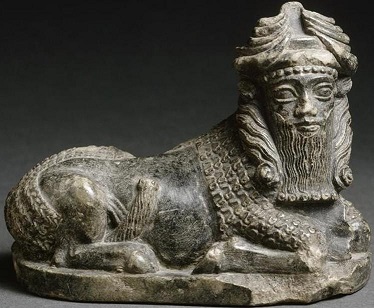
No wonder the common symbol of luck in the stock market is the Bull, symbolic of bull headed sacrificial demonic gods of the past in to whom cattle was sacrificed and also possibly associated with another (now considered demonic) being Beelzebub or Baal-zebub connected with bulls and plundering of bees which is close to what modern animal farming based human systems rigidly constitute. (Image below Ancient Sumerian Bull god, possibly called Ea, 25 BC verus the image of bull in modern stockmarket or even supermarket symbolism). We are all in a matrix inspired by senseless selfish acts that exploit other sentient beings since ancient times binding us to core values of materialism, while our purpose must be to break free from all evil.


 Swati Prakash